
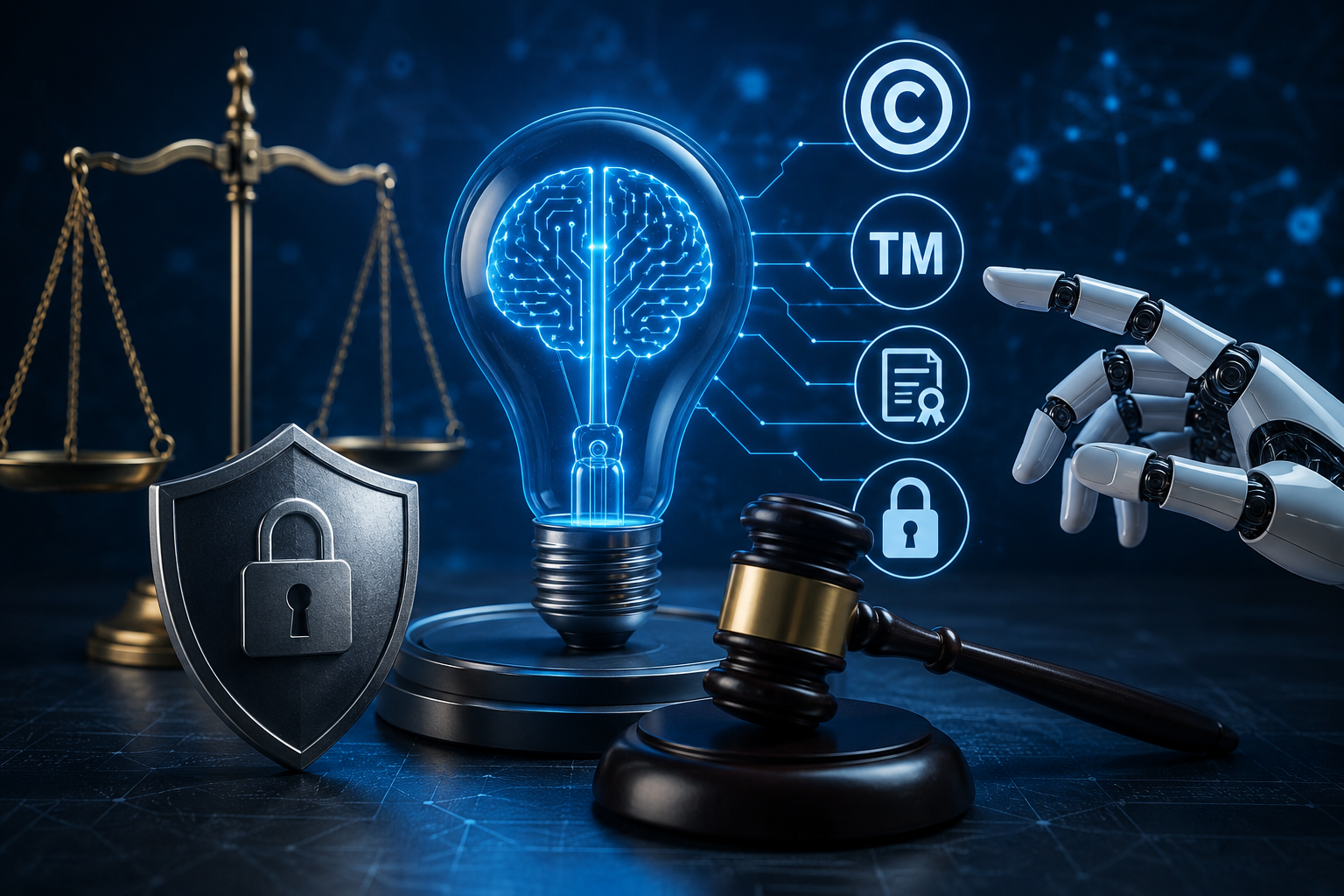
Artificial Intelligence (AI) is transforming industries across the globe, from content creation and software development to healthcare and finance. Businesses, creators, and innovators are increasingly relying on AI-powered tools to improve efficiency and generate new ideas. While these advancements offer significant opportunities, they also raise important legal questions regarding Intellectual Property Rights (IPR).
As AI-generated content becomes more common, issues relating to ownership, copyright protection, trademarks, patents, and infringement are becoming increasingly complex. In India, businesses and individuals must understand how AI impacts Intellectual Property Rights and the legal measures available to protect valuable intellectual assets.
Understanding Intellectual Property Rights in India
Intellectual Property Rights are legal rights granted to individuals and organizations for their creations, inventions, designs, brands, and original works. These rights help creators protect their innovations and prevent unauthorized use by others.
The major forms of Intellectual Property Rights in India include:
Copyright
Copyright protects original literary, artistic, musical, and creative works. It grants creators exclusive rights over the use and distribution of their work.
Trademark
A trademark protects brand names, logos, slogans, and other distinctive identifiers that help consumers recognize a business or product.
Patent
Patents protect inventions and innovative technological solutions by providing exclusive rights to inventors for a specified period.
Trade Secrets
Trade secrets include confidential business information, formulas, strategies, and processes that provide a competitive advantage.
The Growing Influence of Artificial Intelligence
AI systems can now write articles, generate images, compose music, develop software code, and create marketing content within seconds. While this technology offers remarkable benefits, it challenges traditional Intellectual Property frameworks that were designed around human creativity and innovation.
The growing use of AI has raised several legal questions, including:
- Who owns content created by AI?
- Can AI-generated works receive copyright protection?
- What happens when AI uses copyrighted material for training?
- How can businesses protect their intellectual property from AI-driven misuse?
These questions are becoming increasingly relevant as AI adoption continues to grow across industries.
AI-Generated Content and Copyright Challenges
One of the most debated issues in Intellectual Property law is the ownership of AI-generated content.
Traditionally, copyright law protects works created through human skill, judgment, and creativity. However, AI systems can now generate articles, artwork, videos, and software with minimal human involvement.
This creates uncertainty regarding copyright ownership. If an AI tool creates content independently, determining who owns the rights can become complicated. Potential claimants may include:
- The user who provided instructions to the AI system
- The developer of the AI platform
- The organization that trained the AI model
Indian copyright law currently focuses on human authorship, making the legal status of purely AI-generated works an evolving area of law.
AI Training Data and Copyright Infringement Concerns
Many AI models are trained using vast amounts of online content, including books, articles, images, videos, and other copyrighted materials.
This has led to growing concerns regarding copyright infringement. Content creators and businesses are increasingly questioning whether their protected works can be used without permission to train AI systems.
Globally, several legal disputes have emerged involving authors, publishers, artists, and technology companies over the unauthorized use of copyrighted material in AI training datasets. Similar concerns are expected to influence future Intellectual Property discussions in India.
Businesses should remain cautious when using AI-generated content and ensure that their use of AI tools complies with applicable legal and licensing requirements.
AI, Trademarks, and Brand Protection
Artificial Intelligence is also affecting trademark protection and brand management.
Businesses invest significant resources in building strong brand identities. However, AI technologies can create content, advertisements, logos, and digital assets that closely resemble existing trademarks, increasing the risk of consumer confusion and brand infringement.
Additionally, AI-powered impersonation and synthetic media technologies can misuse brand names, logos, and business identities for fraudulent purposes.
To reduce such risks, businesses should:
- Register their trademarks at the earliest opportunity.
- Monitor online platforms for unauthorized use.
- Take prompt legal action against infringement.
- Maintain consistent brand protection strategies.
Strong trademark protection remains essential in the rapidly evolving digital environment.
Deepfakes and Personality Rights
The rise of AI-generated deepfakes has introduced new challenges for Intellectual Property and personality rights.
Deepfake technology can create highly realistic images, videos, and voice recordings that imitate real individuals. This creates risks for celebrities, business leaders, influencers, and public figures whose identities may be used without authorization.
Unauthorized use of a person’s image, voice, or likeness can result in reputational harm, financial losses, and legal disputes.
As AI-generated media becomes more sophisticated, legal protections relating to personality rights, privacy, and intellectual property are expected to receive greater attention from courts and regulators.
AI and Patent Innovation
Artificial Intelligence is accelerating innovation across multiple sectors by helping researchers identify patterns, solve technical problems, and develop new products.
However, AI-generated inventions also raise important patent-related questions.
Patent laws generally require inventorship to be attributed to a human inventor. If an AI system significantly contributes to an invention, determining inventorship may become legally challenging.
Businesses involved in research and development should carefully document human contributions to inventions and seek professional legal guidance when filing patent applications involving AI-assisted innovation.
Protecting Intellectual Property in the AI Era
Organizations must take proactive steps to safeguard their intellectual property assets in an increasingly AI-driven world.
Key measures include:
Register Intellectual Property Rights
Businesses should register trademarks, copyrights, patents, and designs wherever applicable to establish legal ownership and strengthen enforcement rights.
Use Clear Contracts and Licensing Agreements
Well-drafted agreements can define ownership rights, usage permissions, and responsibilities relating to AI-generated content and intellectual property.
Monitor Online Infringement
Regular monitoring can help identify unauthorized use of copyrighted content, trademarks, and proprietary assets before significant damage occurs.
Develop Internal AI Policies
Organizations should establish policies governing the use of AI tools, content creation practices, and intellectual property compliance.
Conclusion
Artificial Intelligence is reshaping the Intellectual Property landscape and creating new legal challenges for businesses, creators, and innovators. Questions relating to copyright ownership, trademark protection, patent inventorship, and AI-generated content continue to evolve as technology advances.
As India moves toward greater digital transformation, understanding the relationship between AI and Intellectual Property Rights is becoming increasingly important. Businesses that proactively protect their intellectual assets, monitor emerging legal developments, and adopt responsible AI practices will be better positioned to navigate the evolving legal environment.
For organizations seeking to protect their intellectual property and address complex AI-related legal issues, obtaining professional legal guidance can help minimize risks and ensure compliance with applicable laws.
FAQs
Can AI-generated content be protected under copyright law in India?
Indian copyright law primarily recognizes human authorship. The legal status of fully AI-generated content remains an evolving area.
How does AI affect trademark protection?
AI can increase the risk of brand misuse, trademark infringement, and unauthorized replication of protected brand assets.
Can an AI system be named as an inventor in a patent application?
Current patent frameworks generally require a human inventor, although legal debates on AI-assisted inventions continue worldwide.
Why is Intellectual Property protection important for businesses using AI?
Strong Intellectual Property protection helps businesses safeguard innovations, brand value, creative assets, and competitive advantages in a rapidly evolving technological environment.
What should businesses do to protect their Intellectual Property Rights?
Businesses should register intellectual property, use clear agreements, monitor infringement, and implement effective AI governance policies.
Tags:
- #ADMAAndAssociates
- #AICompliance
- #AILaw
- #ArtificialIntelligence
- #ArtificialIntelligenceLaw
- #BusinessLaw
- #BusinessProtection
- #CopyrightLaw
- #CopyrightProtection
- #CorporateLaw
- #DefenceColonyDelhi
- #DelhiLawyers
- #DelhiLegalServices
- #DigitalRights
- #FutureOfLaw
- #IndiaLaw
- #InnovationProtection
- #IntellectualProperty
- #IntellectualPropertyRights
- #IPLaw
- #IPProtection
- #lawfirm
- #LawyersOfDelhi
- #LegalAwareness
- #LegalConsultation
- #LegalExperts
- #LegalInnovation
- #LegalServices
- #NewDelhi
- #PatentLaw
- #PatentProtection
- #StartupLaw
- #TechLaw
- #TechnologyLaw
- #TrademarkLaw
- #TrademarkRegistration