
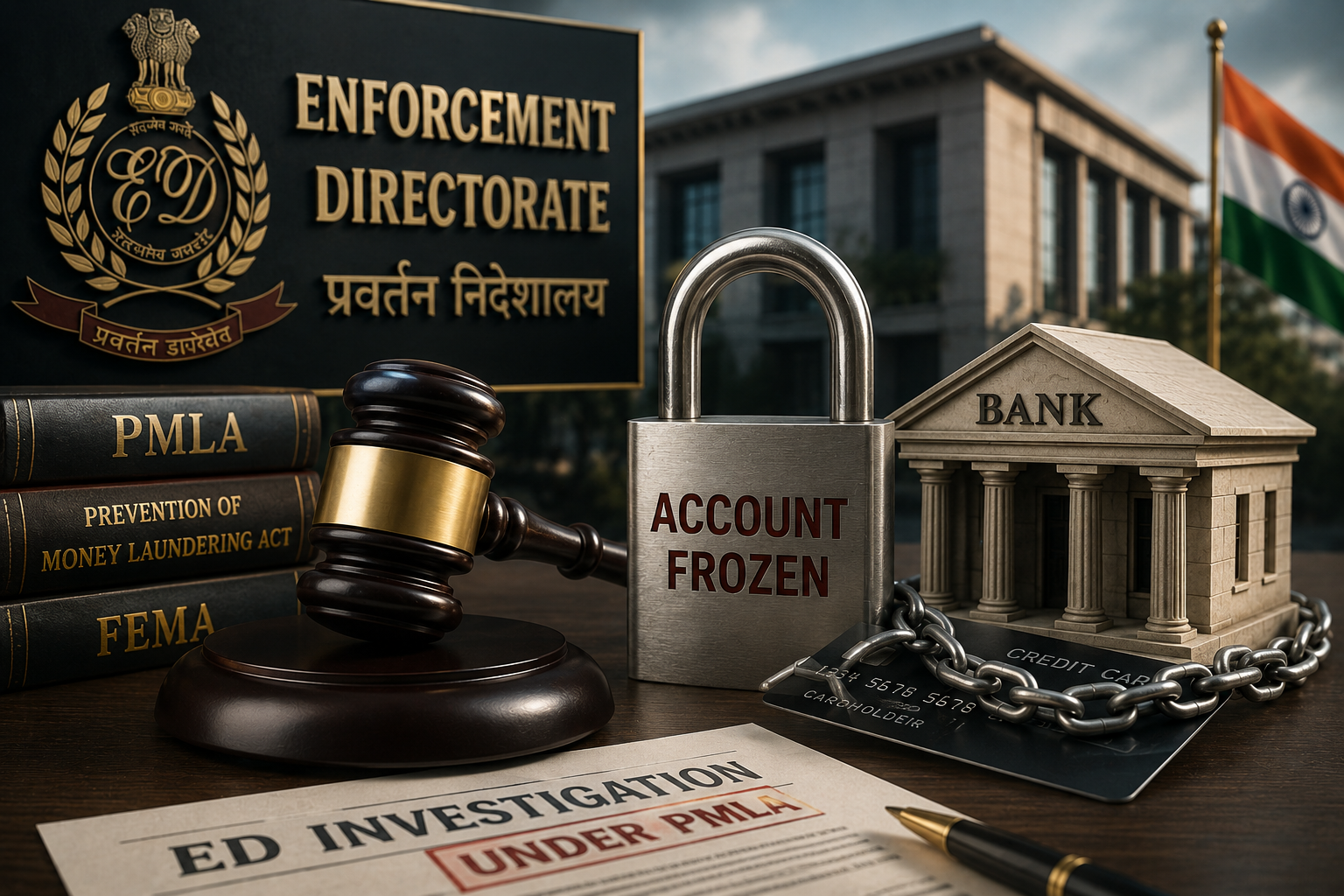
Can the Enforcement Directorate Freeze Your Bank Account? Know Your Legal Rights
Financial investigations conducted by the Enforcement Directorate (ED) can have serious consequences for individuals and businesses. One of the most concerning actions taken during an investigation is the freezing of bank accounts. For many people the sudden inability to access personal or business funds can create significant financial and legal
Read More
Matrimonial Disputes in India: Legal Remedies, Causes, Process and Rights
Matrimonial disputes refer to conflicts between spouses arising out of marriage and related relationships. These disputes can involve issues such as divorce, cruelty, domestic violence, maintenance, child custody, and property disagreements. In India, matrimonial disputes are governed by a combination of statutory laws and personal laws, making the legal
Read More
Money, Law & Accountability: The World of PMLA Cases
In today’s world, financial transparency is not just an ethical expectation—it’s a legal necessity. The Prevention of Money Laundering Act (PMLA) was introduced to fight financial crimes and ensure that money used in illegal activities is tracked, prevented, and brought under lawful scrutiny. With the rapid rise of economic transactions,
Read More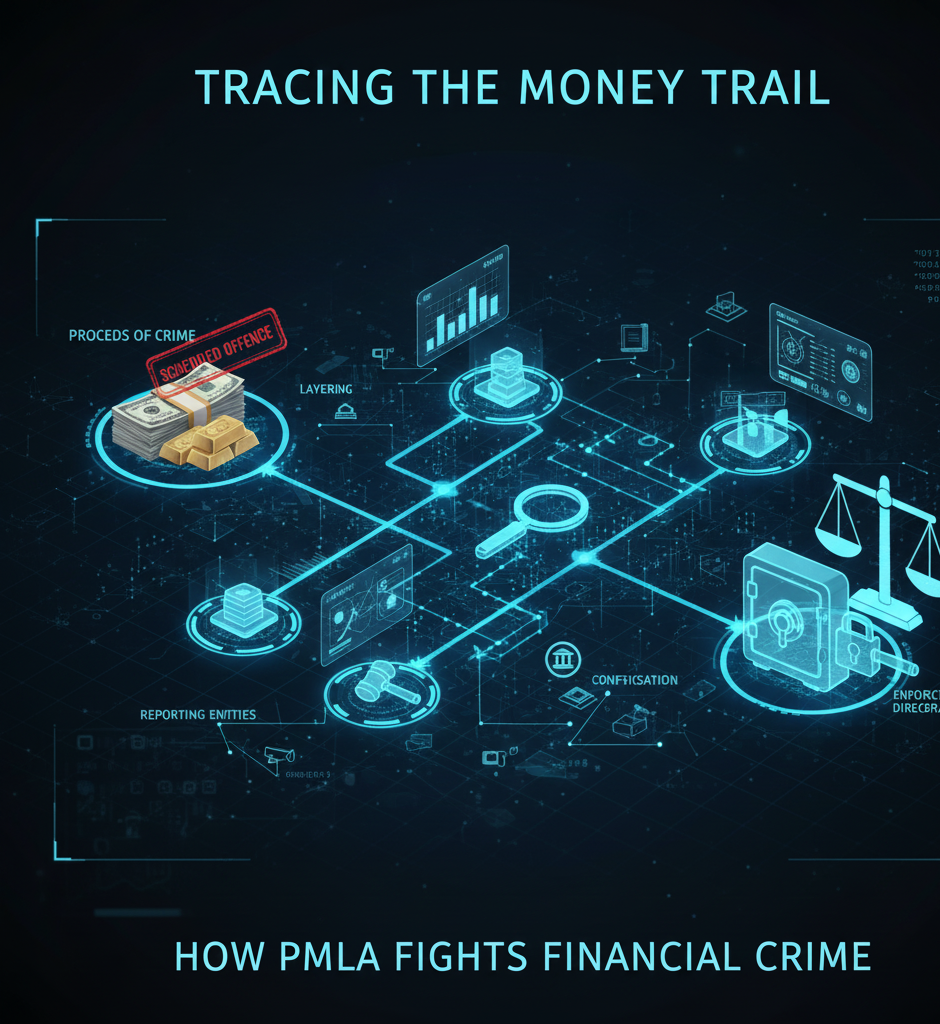
Tracing the Money Trail: How PMLA Fights Financial Crime
In a growing economy, financial crimes like money laundering pose a major threat to transparency and national security. To curb these illegal practices and monitor suspicious financial movements, India enforces the Prevention of Money Laundering Act (PMLA), 2002. This powerful legislation ensures that illicit money does not find a safe
Read More
PMLA Matters: Combating Financial Crime and Ensuring Legal Compliance
The rise in global financial transactions and cross-border investments has increased the risk of money laundering and financial crimes. To address this challenge, India enacted the Prevention of Money Laundering Act (PMLA), 2002, a comprehensive legislation aimed at detecting, preventing, and prosecuting money laundering activities while ensuring accountability and transparency
Read More
White-Collar Crime: Defending Reputation and Upholding Justice
White-collar crimes are non-violent offences committed for financial gain, often involving deceit, manipulation, or breach of trust. Such crimes typically occur in professional, corporate, or business settings and can lead to significant economic loss, reputational damage, and legal consequences. Understanding White-Collar Crime The term white-collar crime refers to offences committed
Read More
Legal Shield Against Money Laundering: Understanding PMLA Matters
Money laundering is one of the most serious financial crimes threatening the integrity of global economies. It enables criminals to disguise the origins of illicit wealth obtained through unlawful activities such as drug trafficking, corruption, tax evasion, and fraud. In India, the Prevention of Money Laundering Act (PMLA), 2002 serves
Read More
Intellectual Property Disputes: Protecting Ideas, Brands, and Innovation
In today’s innovation-driven world, ideas are as valuable as tangible assets. Intellectual property (IP) gives creators, inventors, and businesses exclusive rights over their inventions, designs, artistic works, and brand identities. However, as competition intensifies, Intellectual Property Disputes have become increasingly common. Understanding their nature, causes, and remedies is essential
Read More
*Behind the Suit: Unveiling the Truth of White Collar Offense*
Crime these days is not always committed with a gun or violence — sometimes it’s done with a pen, computer, or an accountant’s statement. White collar crime is technologically sophisticated, often invisible crime that’s committed in boardrooms, offices, and banks. They’re carried out by highly educated professionals, managers, and custodians
Read More
White Collar Crime: Inside the World of Corporate and Financial Offenses
White collar crime refers to non-violent offenses committed by individuals, professionals, or organizations for financial gain. These crimes are typically carried out through deception, breach of trust, or misuse of authority and often involve complex financial transactions. Unlike conventional crimes, white collar offenses are sophisticated in nature and can cause
Read More