
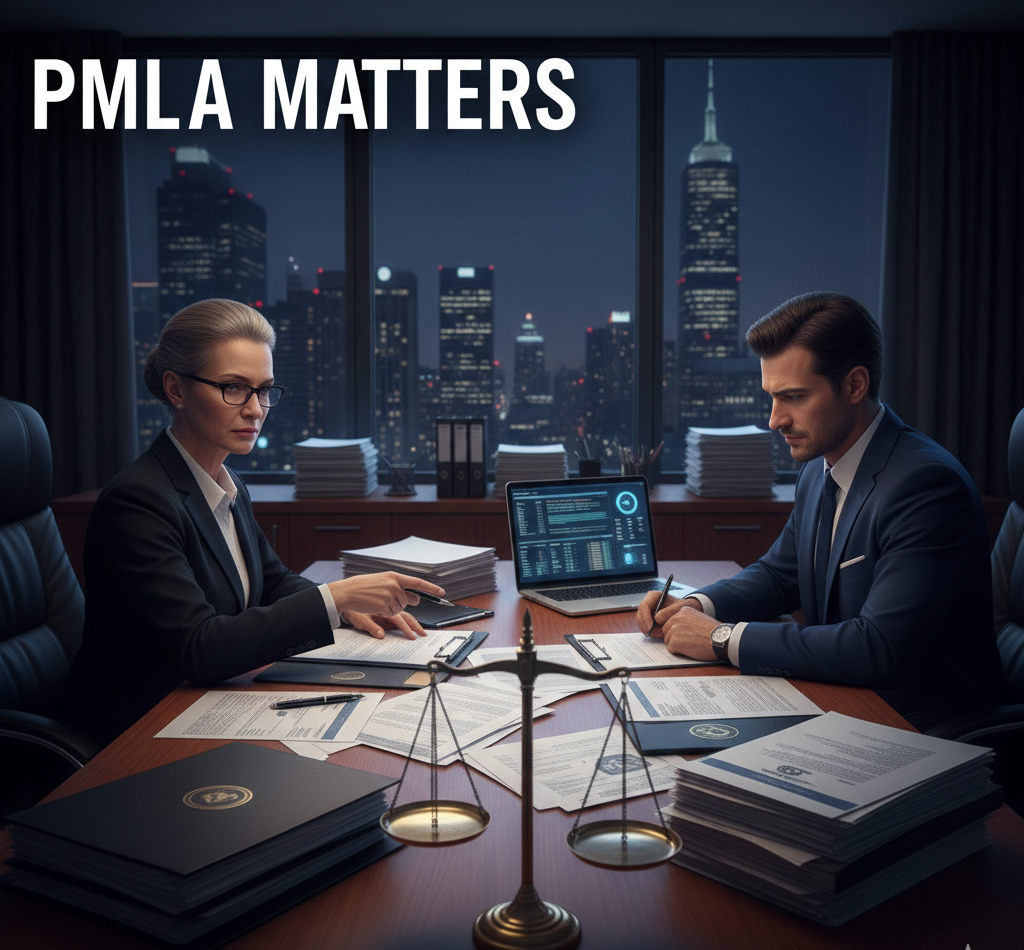
PMLA-Matters
PMLA Matters: Where Economic Offences Face Accountability Economic offences pose a serious threat to the financial stability and integrity of a nation. To combat money laundering and prevent the circulation of illicit funds, India enacted the Prevention of Money Laundering Act (PMLA), 2002. PMLA matters deal with complex financial crimes
Read More
White Collar Crime lawyers
When Power Breaks the Law: The World of White Collar Crime White collar crime represents a complex category of offences committed without violence, often by individuals in positions of power, trust, or professional authority. These crimes typically occur in corporate offices, financial institutions, and boardrooms, yet their impact can be
Read More
Money, Law & Accountability: The World of PMLA Cases
In today’s world, financial transparency is not just an ethical expectation—it’s a legal necessity. The Prevention of Money Laundering Act (PMLA) was introduced to fight financial crimes and ensure that money used in illegal activities is tracked, prevented, and brought under lawful scrutiny. With the rapid rise of economic transactions,
Read More
Crimes Without Violence: The Complexity of White-Collar Offenses
White-collar crime is often misunderstood because, unlike street crimes, it usually doesn’t involve physical harm or violence. Yet, its consequences can be far more damaging—impacting economies, businesses, and the lives of countless individuals. These crimes are committed in professional, corporate, or financial settings and are often driven by greed, financial
Read More
PMLA at the Forefront: Protecting Rights in Money Laundering Cases
Money laundering allegations can turn a person’s life upside down. With increasing financial scrutiny and strict enforcement, cases under the Prevention of Money Laundering Act (PMLA), 2002 have become more frequent and more complex. While the law aims to curb financial crimes, individuals often face aggressive investigations, asset freezing, summons,
Read More
Crimes in the Corporate Shadows: The Truth Behind White-Collar Offences
White-collar crime may not involve physical violence, but its impact can be far more destructive—damaging businesses, investors, public trust, and the economy. These crimes take place behind polished office walls, inside boardrooms, and through digital systems where power, access, and opportunity come together. Unlike street crimes, white-collar offences are silent,
Read More
Silent Crimes, Major Impact: The Challenge of White Collar Offences
White collar offences often occur behind polished office walls and through digital systems — without noise, without violence. Yet, their damage is far-reaching, capable of shaking financial stability, destroying public trust, and costing billions. These crimes are sophisticated, calculated, and committed by individuals in positions of power. What Are White
Read More
The Legal Weapon Against Money Laundering: PMLA Insights
Money laundering is a serious economic crime that threatens financial security and enables corruption, terrorism funding, and organized illegal activities. To combat this, India introduced the Prevention of Money Laundering Act (PMLA), 2002 — a comprehensive law designed to detect, prevent, and punish the conversion of unlawful proceeds into seemingly
Read More
Fraud Behind the Desk: The Truth About White Collar Crime
White collar crime is often silent, sophisticated, and hidden behind professional attire. Unlike traditional crimes, these offences are committed through deception rather than violence — yet their impact on the economy and society can be massive. From large-scale financial scams to digital frauds, White Collar Crimes are on the rise
Read More
Crimes in Suits: Exposing the Hidden World of White-Collar Offences
White-collar crime is often called the “silent thief.” Unlike traditional crimes that involve violence or physical force, white-collar offences quietly steal money, trust, and integrity. These crimes are committed by individuals in positions of power—business owners, corporate officials, government employees, and financial professionals. Their tools are not guns or weapons
Read More