
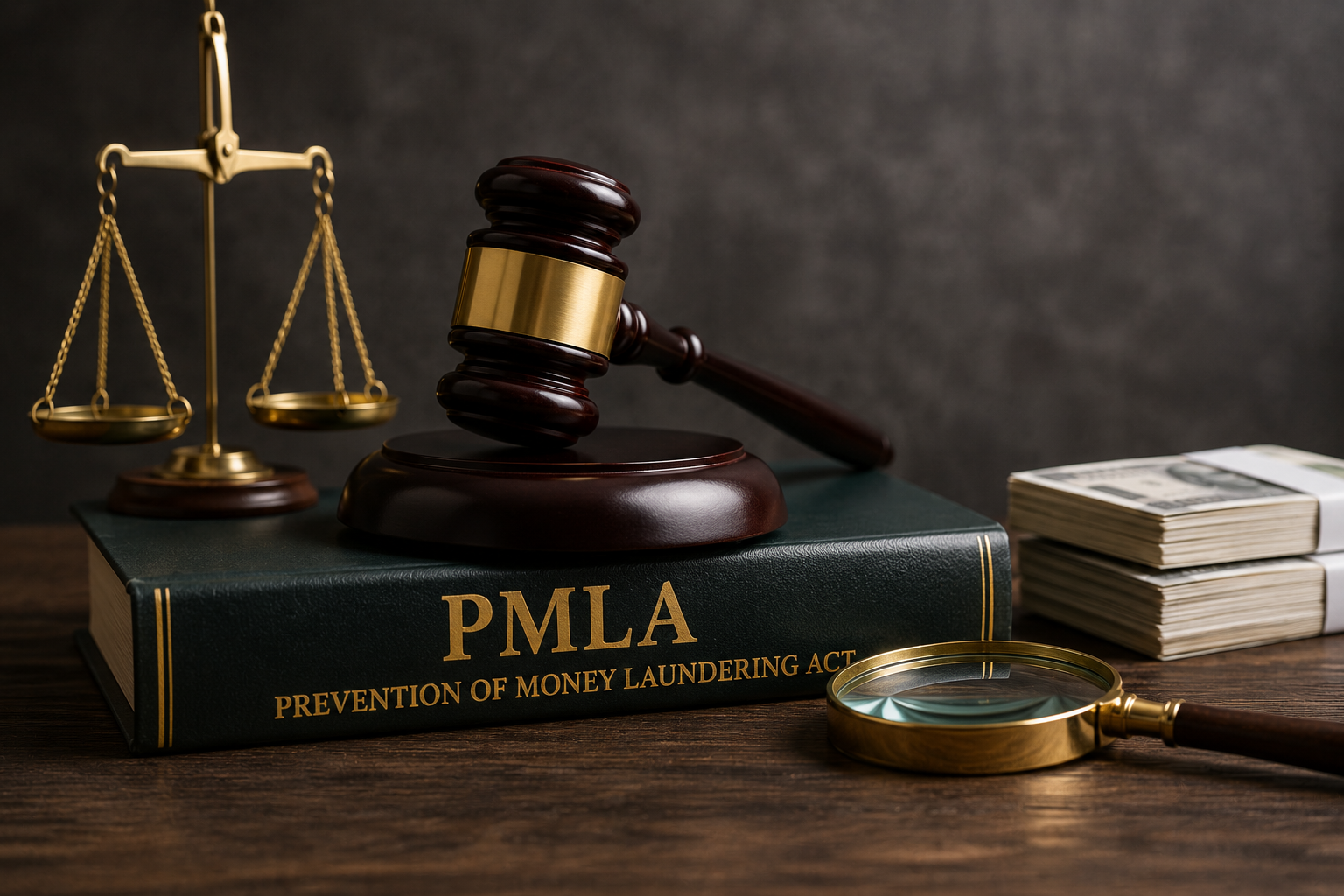
PMLA in India: Understanding the Prevention of Money Laundering Act, 2002
The Prevention of Money Laundering Act (PMLA), 2002 is one of the most significant financial and criminal laws in India aimed at combating money laundering, financial fraud, illegal transactions, and the concealment of proceeds generated through unlawful activities. The law empowers investigative agencies to identify, trace, freeze, seize, and confiscate
Read More
White-Collar Crime: Understanding Financial and Corporate Criminal Offences
White-collar crime refers to non-violent crimes committed for financial gain, usually by individuals, professionals, business executives, government officials, or corporate entities. These crimes are often committed through deception, fraud, breach of trust, or misuse of authority rather than physical violence. The term was introduced to describe crimes committed by people
Read More
White-Collar Crime Detection and Reporting: Expert Legal Guide
White-collar crime has emerged as one of the most complex challenges for individuals, businesses, and governments in India. Unlike traditional crimes, white-collar offenses involve financial deception, corporate fraud, and unethical business practices, often committed by professionals in positions of trust. Effective detection and reporting are critical to prevent financial losses,
Read More
White Collar Crime lawyers
When Power Breaks the Law: The World of White Collar Crime White collar crime represents a complex category of offences committed without violence, often by individuals in positions of power, trust, or professional authority. These crimes typically occur in corporate offices, financial institutions, and boardrooms, yet their impact can be
Read More
White-Collar Crime
White-Collar Crime Cases Explained: Expert Legal Guidance White-collar crime refers to financially motivated, non-violent crimes committed by individuals, businesses, or government officials for personal or corporate gain. In India, these offences can have serious legal consequences, including imprisonment, fines, and reputational damage. Common examples include fraud, embezzlement, insider trading, money
Read More
Behind the Suits: The Silent World of White Collar Crime
White collar crime is often invisible, subtle, and far more destructive than it appears. Unlike traditional crimes associated with violence or physical harm, white collar offenses are committed quietly—behind corporate desks, inside boardrooms, and through digital systems. The individuals involved often appear respectable: executives, financial advisors, government officials, corporate employees,
Read More
Breaking the Laundering Chain: Understanding PMLA Investigations
Money laundering is a serious threat to the integrity of any financial system. Criminals use it to disguise illegal income and make it appear legitimate. In India, the Prevention of Money Laundering Act (PMLA), 2002 was enacted to combat such offences. Over the years, PMLA has become a critical tool
Read More
PMLA Uncovered: The Law Behind Anti–Money Laundering
Money laundering is one of the biggest threats to a country’s financial and economic stability. It allows criminals to hide illegal earnings, fund serious crimes, and damage public trust in financial systems. To stop this, India introduced one of its strongest legal weapons—the Prevention of Money Laundering Act (PMLA), 2002.
Read More
White Collar Crime: Tackling Financial Frauds, Corporate Misconduct, and Economic Offences in Modern Society
In today’s fast-paced, globalized economy, crime is not always violent or visible. Some of the most dangerous and damaging offences occur quietly, through deception, manipulation, and abuse of power. These are known as white collar crimes—non-violent crimes committed for financial gain, usually by individuals in positions of trust and authority.
Read More
White-Collar Crime Law: Navigating Fraud, Finance, and Corporate Misconduct
White-collar crimes are non-violent, financially motivated offenses usually committed by professionals, executives, or organizations. These crimes often involve deceit, manipulation, and breach of trust, causing severe financial loss to individuals, corporations, and even the economy at large. 📌 Key Aspects of White-Collar Crime Law:✔️ Fraud & Misrepresentation – Includes securities
Read More