

Tracing Illicit Wealth: Unpacking PMLA Matters
Tracing Illicit Wealth: Unpacking PMLA Matters In the modern financial world, illicit wealth and money laundering pose serious threats to the integrity of economic systems. The Prevention of Money Laundering Act (PMLA), 2002 is India’s cornerstone legislation to combat these offences, aiming to detect, investigate, and punish the laundering of
Read More
When Power Breaks the Law: Inside White-Collar Crime
When Power Breaks the Law: Inside White-Collar Crime White-collar crime represents a silent yet formidable threat to the legal, financial, and ethical foundations of modern society. Unlike conventional crimes involving physical violence or force, white-collar offences are committed through deception, manipulation, and abuse of authority—often by individuals occupying positions of
Read More
White-Collar Crime
White-Collar Crime Cases Explained: Expert Legal Guidance White-collar crime refers to financially motivated, non-violent crimes committed by individuals, businesses, or government officials for personal or corporate gain. In India, these offences can have serious legal consequences, including imprisonment, fines, and reputational damage. Common examples include fraud, embezzlement, insider trading, money
Read More
The Invisible Theft: A Deep Dive into White Collar Crime
White collar crime is often called the “invisible theft” because it happens quietly, without violence, yet its impact can be devastating. Unlike traditional crimes, these offenses are committed through deceit, manipulation, and abuse of trust — often by people in professional or corporate positions. “The Invisible Theft: A Deep Dive
Read More
PMLA Unveiled: Inside India’s Fight Against Money Laundering
Money laundering is one of the biggest threats to a nation’s economic stability and financial integrity. To combat this challenge, India introduced the Prevention of Money Laundering Act (PMLA), 2002, a powerful law designed to track illegal money, punish offenders, and safeguard the financial system. “PMLA Unveiled: Inside India’s Fight
Read More
Crimes Without Violence: The Complexity of White-Collar Offenses
White-collar crime is often misunderstood because, unlike street crimes, it usually doesn’t involve physical harm or violence. Yet, its consequences can be far more damaging—impacting economies, businesses, and the lives of countless individuals. These crimes are committed in professional, corporate, or financial settings and are often driven by greed, financial
Read More
Behind the Suits: The Silent World of White Collar Crime
White collar crime is often invisible, subtle, and far more destructive than it appears. Unlike traditional crimes associated with violence or physical harm, white collar offenses are committed quietly—behind corporate desks, inside boardrooms, and through digital systems. The individuals involved often appear respectable: executives, financial advisors, government officials, corporate employees,
Read More
PMLA at the Forefront: Protecting Rights in Money Laundering Cases
Money laundering allegations can turn a person’s life upside down. With increasing financial scrutiny and strict enforcement, cases under the Prevention of Money Laundering Act (PMLA), 2002 have become more frequent and more complex. While the law aims to curb financial crimes, individuals often face aggressive investigations, asset freezing, summons,
Read More
Crimes in the Corporate Shadows: The Truth Behind White-Collar Offences
White-collar crime may not involve physical violence, but its impact can be far more destructive—damaging businesses, investors, public trust, and the economy. These crimes take place behind polished office walls, inside boardrooms, and through digital systems where power, access, and opportunity come together. Unlike street crimes, white-collar offences are silent,
Read More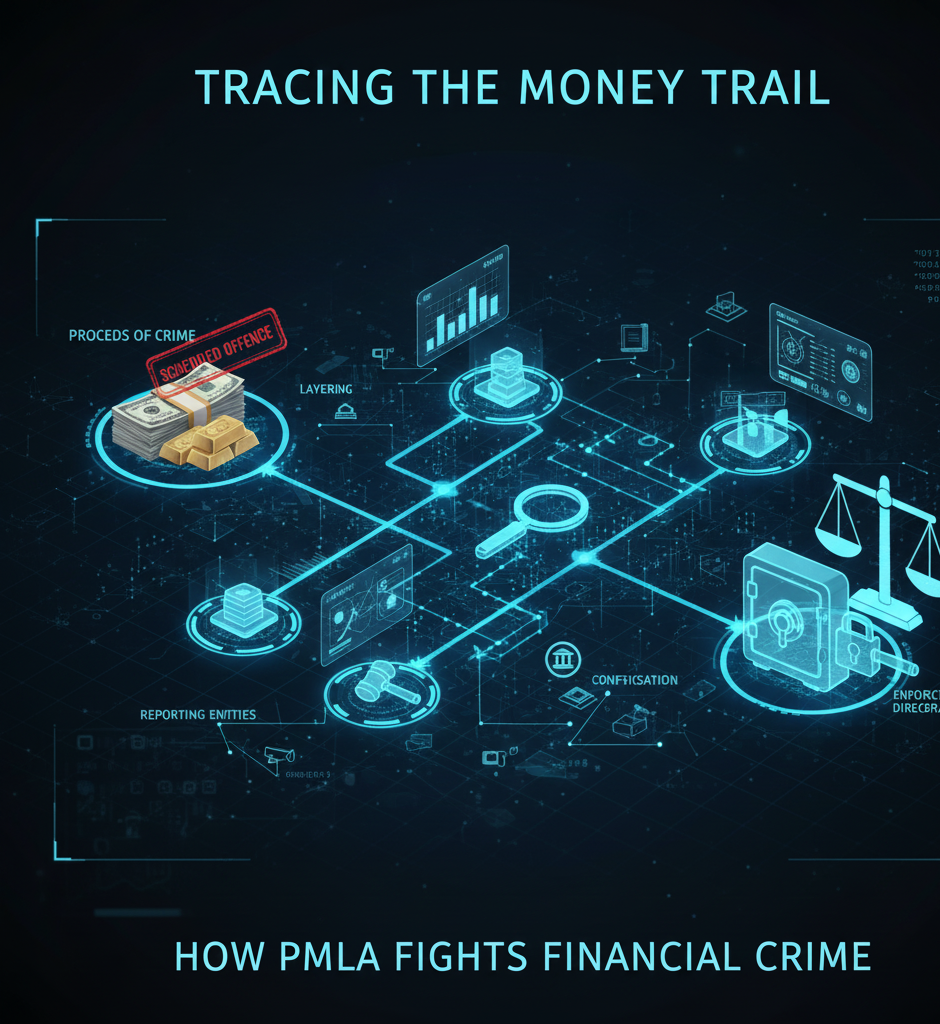
Tracing the Money Trail: How PMLA Fights Financial Crime
In a growing economy, financial crimes like money laundering pose a major threat to transparency and national security. To curb these illegal practices and monitor suspicious financial movements, India enforces the Prevention of Money Laundering Act (PMLA), 2002. This powerful legislation ensures that illicit money does not find a safe
Read More